Facts & Figures about the Netherlands

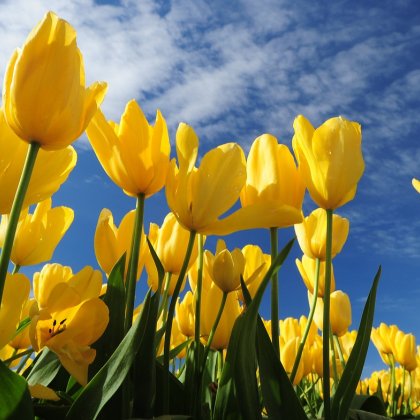
The Netherlands is known as a country of mills, bulb fields, dykes and canals. However, the Netherlands has much more to offer. The Netherlands Board of Tourism and Conventions (NBTC) strives to broaden the image of the Netherlands domestically and internationally, and to substantiate the image of the Netherlands as an attractive tourist destination. Highlighting certain facts helps create a balanced picture of the Netherlands.

Area: 41,528 km² (18.41% water)
Total population: over 16.5 million
Population density: 488 people per km2
Capital city: Amsterdam (inhabitants: 747,000 in 2010)
Government: The Hague
Official languages: Dutch, Frisian (only spoken in Friesland)
Type of government: Constitutional monarchy – parliamentary democracy
Religion: 27% Roman Catholic, 17% Protestant,
Currency: Euro
National holidays: Queen’s Day (30 April) Liberation Day (5 May)
Highest point: 323 m (Vaalserberg, Limburg)
Lowest point: -6.7 m (Nieuwerkerk aan den IJssel, Zuid-Holland)
Average temperature in July: 17.4 °C
Average temperature in January: 2.8 °C

Small country with a large population

The Kingdom of the Netherlands consists of three separate countries: The Netherlands, Aruba and the Dutch Antilles. With over 16.5 million people and a population density of 488 people per km2, the Netherlands is the most densely populated country of the European Union and is one of the mostly densely populated countries in the world. The total size of the Netherlands is 41,500 km2. Amsterdam is the capital, but the government resides in The Hague. More than 40% of the total population live in the Randstad, the agglomeration of the cities of Amsterdam, Rotterdam, The Hague and Utrecht. With 62 km between them, The Hague and Utrecht are the furthest away from each other in the Randstad. The Netherlands has twelve provinces: Groningen, Friesland, Drenthe, Overijssel, Gelderland, Utrecht, North Holland, South Holland, Zeeland, North Brabant, Limburg and Flevoland. The country is compact and easy to navigate: it is 400 kilometres from north to south and 200 kilometres from east to west. The Netherlands has been a member of the European Union since 1986.

Landscape

Water dominates the Dutch landscape. Three big European rivers (Rhine, Meuse and Scheldt) reach the ocean via the Netherlands and create an important delta. 26% of the Netherlands is under sea level. During a century long battle against the water, the Dutch constructed a water system consisting of dykes, polders and weirs. However, the Netherlands offers more variation than the familiar green, flat polder landscape with black and white cows. Since the Netherlands is located on the sea, the west and the north feature beaches and a unique dune landscape. The middle of the country alternates forests with sand drifts, the east consists of moorlands, while Limburg in the south sports a chalky and hilly landscape.

Climate

Due to its position on the North Sea, the Netherlands has a moderate sea climate with mild winters and cool summers. In most places, the coldest month on average is January and the warmest is July. The sunniest part of the Netherlands are the western part of Zeeland and the northwest of North Holland, including the island of Texel, with approximately 1600-1700 hours of sun. On average, there is approximately 790 mm of rainfall per year. The four seasons each have a distinct character. For current weather forecasts, go to www.knmi.nl and www.buienradar.nl

Currency

The Netherlands has been a member of the European Union from the start. As a result, the Euro has been the legal currency since 2002.

Ethnic groups

The largest ethnic groups beside the original Dutch (80%) are Turkish, Surinamese, Moroccans and people from Aruba and the Dutch Antilles. However, a city like Amsterdam easily comprises 170 nationalities.

Language

The official language is Dutch. The population of the province of Friesland has a choice between Dutch and Frisian, the only officially recognised regional language. The Netherlands also include the regional languages of West Low German and Limburgs. In the other parts of the Netherlands, people often speak a dialect besides Dutch. Many Dutch also speak German and English.

Religion

In the Netherlands, historically a Christian country, approximately half of the population are religious. In the north and the west, non-religious people make up the majority whereas Catholics are the majority of the two southern provinces of North Brabant and Limburg. As a result of immigration, the number of religions in the Netherlands has increased.

Population by religion 2005 (%)
Roman Catholic 27
Protestant 16
Muslim 5
Hindu 1
Other 2
None 48

Source: CBS

Form of government

The Netherlands is a constitutional monarchy with Queen Beatrix as Head of State. The Queen and the ministers form the Government. Prime Minister Mark Rutte is the Head of the Council of Ministers (Ministers and State Secretaries). Since the Netherlands is a parliamentary democracy, decisions are taken by the Second Chamber, the House of Representatives.

The Netherlands has a multi-party system. Every four years, all the Dutch who are entitled to vote, elect the parliament, also referred to as the State-General. It consists of the First and Second Chambers. The Second Chamber works with the Council of Ministers to create laws and evaluates whether they are properly implemented. The First Chamber supervises the Second Chamber.

Economy

Even though, the Dutch economy shrank by 4.5% in the first quarter of 2009, compared to 2008, (CBS: GNP: 595,883 Euro), the Netherlands is a prosperous country. The Netherlands is known as a politically stable country with a sound financial policy.

The decline in the first quarter can mainly be attributed to less investments and exports. The Netherlands is one of the most open economies of the world and is one of the top 5 biggest exporters of the world. International trade of the Netherlands, expressed as a percentage of GNP, was 70 percent in 2007. Germany has always been and still is the main trade partner of the Netherlands.

Three quarters of the professional population work in the tertiary sector, one quarter in the industrial sector and only 4 percent in agriculture. However, the Netherlands are a big exporter of agricultural and horticultural products. Some big Dutch companies are: Shell, Unilever, Akzo Nobel, Philips, Aegon, ING Group, Rabobank, Heineken, TNT and Randstad.

National anthem and football go hand in hand

The Dutch National anthem is ‘Het Wilhelmus’ and it consists of 15 stanzas about Prince William of Nassau, the Prince of Orange. The anthem is still used at official occasions, but most Dutch people will mainly recognise it because it is used during international football competitions.

Social ways

The Dutch are creative, open minded and pragmatic. They are also rather direct, honest and open in their dealings with others. During (business) meetings, the Dutch will quickly become informal and amicable. On the other hand, the Dutch expect you to be on time and to honour agreements.  The Dutch are known for their tolerant attitudes towards topics such as abortion, euthanasia and (soft) drug use. The Dutch are also known for their thriftiness. This is exemplified by the expression ‘Going Dutch’, which is mainly used by foreigners.

Upon introduction, the Dutch shake hands. After the initial introduction, during subsequent meetings, the hand shaking will be accompanied by three kisses on the cheek.

The Dutch will quickly address others informally during (business) meetings. At such moments, the Dutch person comes across quite informal and amicable. At the same time, a certain formality will be maintained for a long time with regard to business relationships. A colleague is not easily accepted into one’s private life. Business and private often stay separate.

Did you know… ?

  • The Netherlands has more than eighty restaurants with one or more Michelin stars?
  • The Netherlands has the highest density of museums per square metre? See also www.hollandartcities.com
  • The Dutch are the tallest people in the world (men: 183.2 metres, women: 170.6 metres)
  • The Dutch saying “Act normally, that’s crazy enough” fits the Dutch like a glove?
  • Since 1901, sixteen Dutch have been awarded the Nobel Prize?
  • Football is the national sport?
  • Women’s football is currently the fastest growing sport?
  • With 18 million bikes, the Netherlands has the highest bicycle density in the world? 84% of  the Dutch have one or more bicycles www.fietsplatform.nl
  • The Dutch are really thrifty? Eight in ten households save money. The total savings of all the Dutch amount to 187 billion euros. www.cbs.nl
  • The Wadden island of Terschelling is the largest municipality of the Netherlands in terms of area? 712.98 km2 compared to the smallest municipality of Rozenburg, with 6.5 km2
  • With 757,861 inhabitants, Amsterdam is the largest city in terms of population?
  • Nieuwerkerk aan den IJssel is the lowest municipality? 6.76 metres under sea level
  • Vaals is the highest municipality? 322.5 metres and that this is also the point where the Netherlands, Germany and Belgium meet?
  • Saint Nicholas’ Eve on 5 December is the number 1 tradition of the Netherlands?
  • There is no country in the world where more liquorice is consumed than in the Netherlands (on average 32 million kilos per year)?
  • 26% of the Netherlands is under sea level?
  • 3% of the Netherlands consists of National Parks?
  • Anyone 14 years or older, in the Netherlands, has to carry an original and valid proof of identity?
  • Tourism represents no less than 3% of the country’s gross domestic product (GDP)? (SRT, 2006)
  • The Frisian Dutch black and white cow feels at home in the flat, green polder landscape? The Netherlands has 1,466,134 cows (2008). They produce 10 billion litres of milk.
  • On average, the Dutch eat 14.3 kg of cheese per year?
  • The Netherlands has 1048 windmills and 108 water mills?
  • The mills in the Netherlands represent the century long battle against the water?
  •  Cheese is also a good export product, with 500 million kilos exported per year?
  •  Many Dutch eat raw herring with onions using their hands?


More information
See www.holland.com and the website of the Ministry of Foreign Affairs for more facts and figures about the Netherlands. For visual material, please go to the NBTC image database. To access this database, please register at www.imagesofholland.com.