Category:Newsroom

30 Years of Amsterdam Pride - July 2, 2026

Over the past 30 years, Amsterdam Pride has become a global symbol of freedom and visibility. Few people realise it all began as the idea of three friends: a maths teacher, a finance director and an organiser from Amsterdam's gay community. They simply wanted to give the city a gift.

Hundreds of thousands of people lining Amsterdam’s canals, rainbow flags across the city, and boats filled with dancing revelers: over the past thirty years, Amsterdam Pride has grown into a global symbol of freedom and visibility. What few people know is that the event began as the idea of three friends—a mathematics teacher, a finance director, and an organizer from Amsterdam’s gay community. Their simple goal was to give something back to the city.

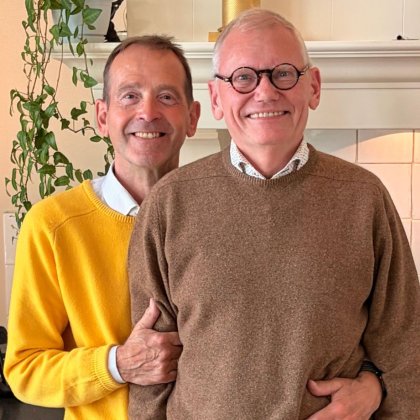
Siep de Haan (68) spent many years working as a mathematics teacher in Utrecht, Peter Kramer (67) was a finance director at a housing corporation in Den Helder, and Ernst Verhoeven was active within Amsterdam’s gay community. Together, they laid the foundations for Amsterdam Pride in 1996. None of them originally came from Amsterdam. It was precisely this outsider’s perspective that made them appreciate the freedom and openness they encountered in the city. They wanted to showcase that atmosphere not only to the LGBTQ+ community itself, but to everyone.

That ambition became clear during the very first edition of Amsterdam Pride. “Which bridge offers the best view of those naked boys?” The question did not come from a young partygoer in Amsterdam, but from elderly women in Limburg who called the organizers of the very first Amsterdam Pride thirty years ago. Siep de Haan still laughs when he recalls it. “To me, that was emancipation at its very best.”

Why Amsterdam Was Late in Getting a Pride

When Peter Kramer and Siep de Haan moved to Amsterdam in the early 1990s, cities such as New York, Berlin, and Paris had already been hosting Pride events for years. Amsterdam, surprisingly, did not. They found this strange, especially because the city had an international reputation for being relatively free and tolerant toward homosexuals.

“We were incredibly happy living here,” says Kramer. “So, as a gay community, we wanted to give the city a celebration as a gift.”

For Kramer, that sense of freedom was remarkable. “In other cities, you had to ring the bell at a gay bar, and someone would first open a small hatch to see who was trying to come in. In Amsterdam, people simply stood outside on the street with a beer. Everyone mixed together.” This philosophy made Amsterdam Pride fundamentally different from many other Pride events. In cities such as New York, Pride emerged primarily as a protest against discrimination and police violence. Amsterdam deliberately chose a different tone.

“We didn’t even call it Gay Pride,” says De Haan. “We called it Amsterdam Pride. Pride in the city, pride in all its residents.”

The organizers wanted to engage not only the LGBTQ+ community but the entire city, including heterosexual residents, families, and tourists.

A Parade on the Water

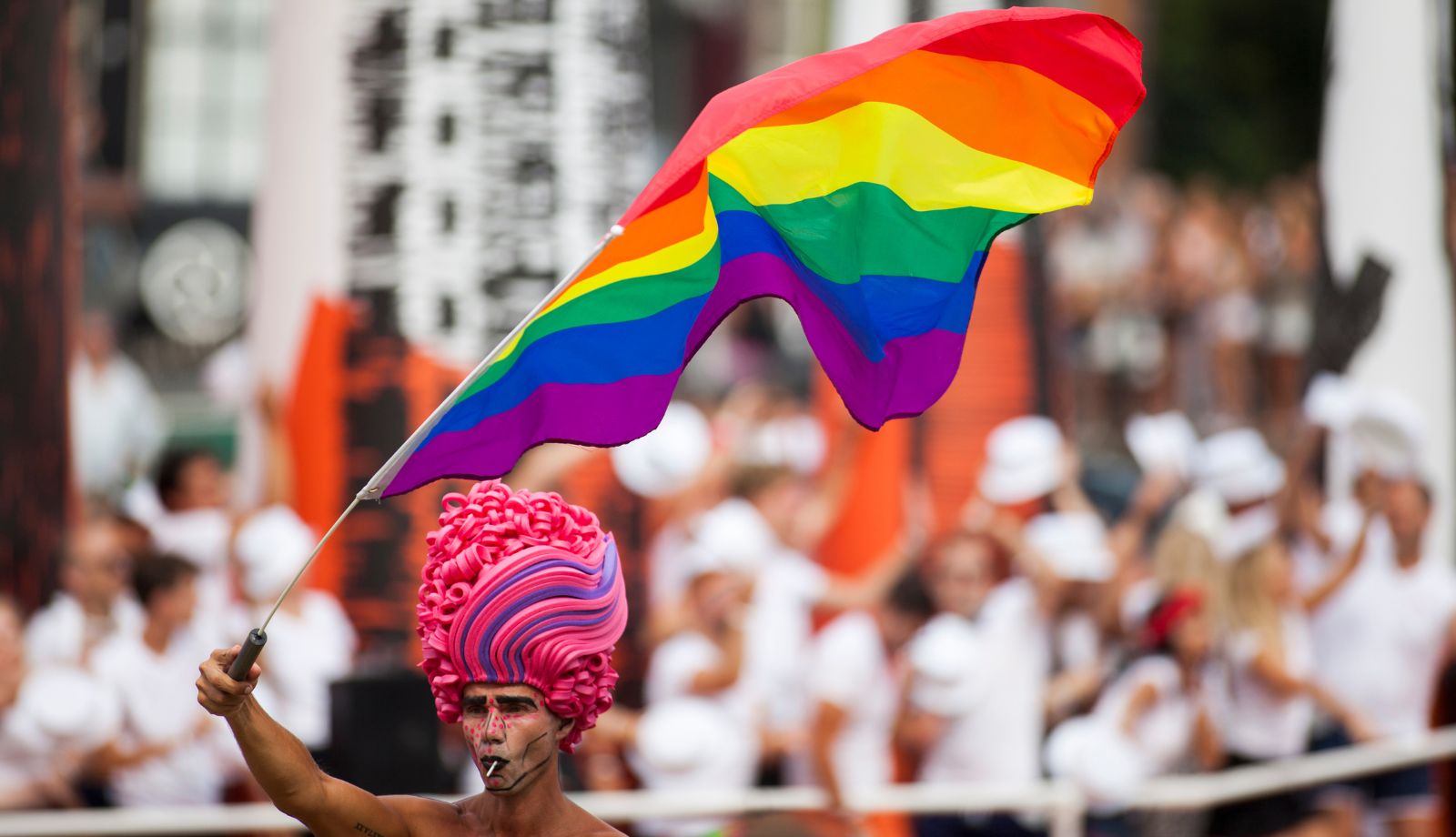
Rainbow flag during a Pride celebration in Amsterdam

That is why they came up with a concept that did not exist anywhere else in the world: a parade not through the streets, but along the canals. The Canal Parade was born. During the first year, around 20,000 people came to watch. One year later, attendance had grown to 80,000. By the third year, it had reached a quarter of a million visitors. International media quickly took notice. CNN returned year after year to film the event, although the footage shown on American television was sometimes “cleaned up a little,” as De Haan says with a smile. “In the first year, there were twenty thousand people standing along the canals,” Kramer recalls. “Today there are several hundred thousand. After King’s Day, it is the largest event in the city.” 

Yet the founders were determined that Pride should not become merely a colorful spectacle. A playful and mischievous atmosphere was welcome, but there had to be limits. Together with the police, the organizers even drafted an official code of conduct stating that sexual acts on the boats were prohibited. “We wanted nudity with a wink,” says De Haan. “Subtle. Families had to feel welcome too.”  

Absurd Discussions with the Police

At times, this led to some absurd conversations. One year, a boat appeared carrying men dressed in skin-colored suits with conspicuously stuffed socks, creating the illusion that they were completely naked. The police were unsure whether they should intervene. “We felt this young man was sufficiently dressed,” De Haan laughs, recalling one of the post-event evaluation meetings.

Remarkably, Amsterdam Pride was hardly dependent on public subsidies in its early years. Large hospitality companies provided financial guarantees, while sponsors such as Heineken supported the event. The organization worked creatively and cautiously with limited resources. “We really started with nothing more than paving stones,” says De Haan. “But that was exactly what made it fun: creating something enormous with almost nothing.” 

A “Lovely Crowd”

The City of Amsterdam supported the initiative almost immediately. Mayor Patijn hosted an official opening reception during the very first year. According to Kramer, the police also worked exceptionally well with the organization. During Pride weekends, there were often fewer incidents than during ordinary weekends in the city. “The people who come to Pride are simply a very lovely crowd,” he says.  

“Then We Become a Target”

Thirty years later, however, the founders look at the present with mixed feelings.

Although Pride has become larger and more international than ever—Amsterdam is hosting WorldPride this year—they are concerned about increasing social polarization. In particular, statistics regarding young people trouble them deeply. Recent research shows that only 43 percent of Amsterdam secondary school students fully accept homosexuality. De Haan, who spent forty years teaching mathematics, notices this change firsthand. “In the past, students were eager to come to Amsterdam to meet drag queens,” he says. “Today, that would be very different.” Young people themselves also seem more cautious. On student boats participating in Utrecht Pride, sometimes only one or two students per school dare to be visibly involved. “Boys literally say: if we join a gay group, we become a target.”

Despite these concerns, the founders are not cynical. Rather, they remain vigilant.

They still see Pride as a place where freedom becomes visible, especially at a time when that freedom no longer feels self-evident. “Thirty years ago, we never imagined that we would once again have to be careful,” says Kramer. “On paper, everything is well organized in the Netherlands. But you never know what is in people’s minds.” “The story is apparently never finished,” says De Haan. And perhaps that is exactly why the Canal Parade continues to attract so many people—not only because of the boats, the music, or the rainbow flags, but because every year Amsterdam once again demonstrates what an open city can look like.